
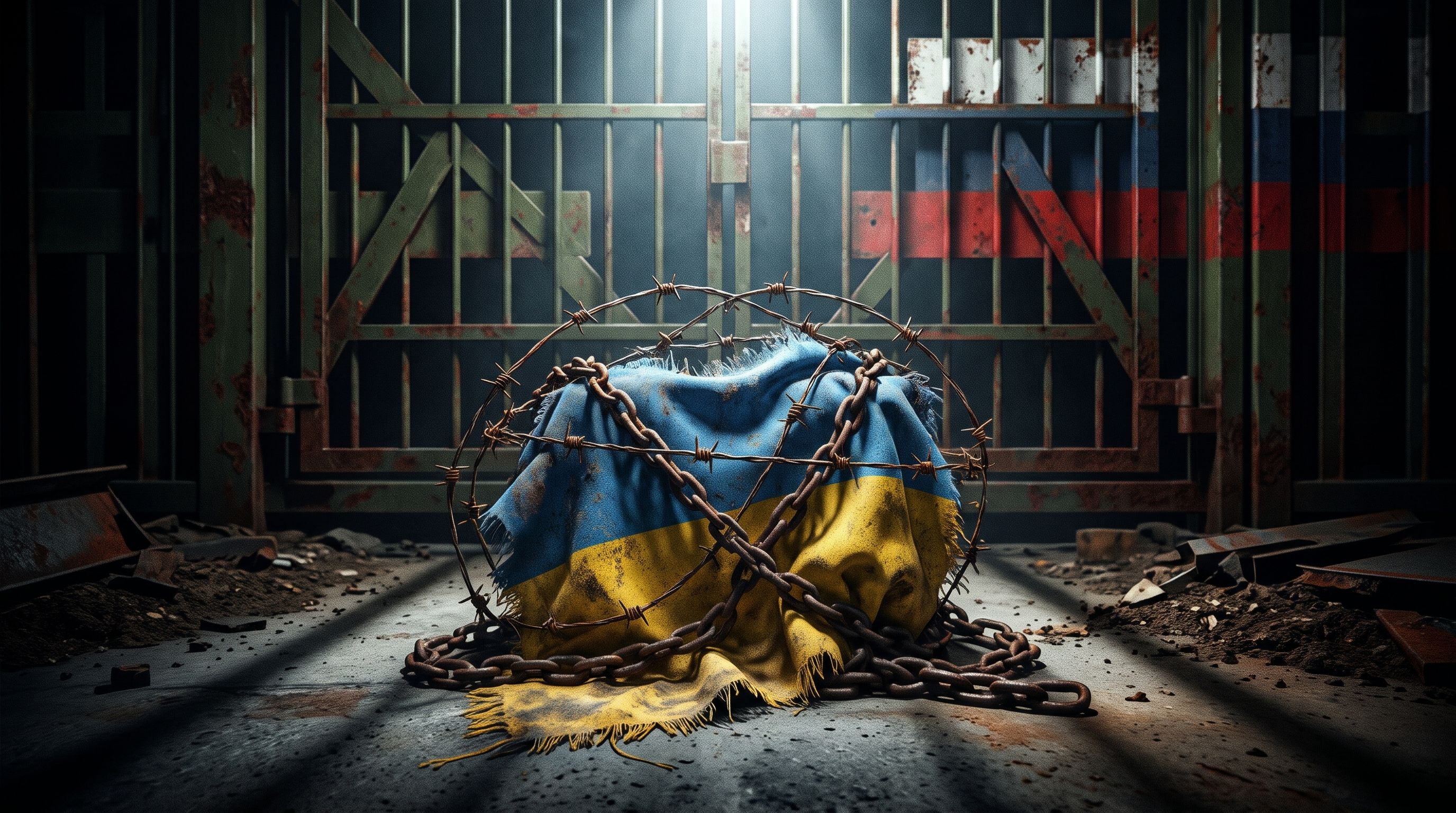
UN reports document torture and ill-treatment inflicted on Ukrainian prisoners of war in Russian captivity, including physical and sexual violence, isolation and inadequate medical care. The article examines recurring practices in detention facilities and the responsibility of the Russian authorities.
What do the figures show? In its report published on 29 June 2026, the UN records interviews with 129 repatriated Ukrainian prisoners of war. Of these, 124 described torture or other ill-treatment, while 97 reported repeated abuse over extended periods in official internment facilities. These figures refer to the group interviewed, rather than to all service members held in captivity.
Violence often began upon arrival at a detention facility. A UN report from October 2024 had documented such “admission procedures” at 38 detention sites. Prisoners described being forced to pass between guards who beat them, being held in painful positions, receiving electric shocks and being forcibly stripped. Some had undergone these procedures at as many as five different facilities. Their repetition with every transfer made relocation another source of fear.
The abuse continued during routine activities. In the December 2025 report, former prisoners described beatings during inspections, on the way to the showers or the medical unit, suffocation, dog attacks and exhausting physical exercises. Some said they were not even told the name of the institution where they were being held. Others reported torture during interrogations to extract confessions concerning alleged war crimes.
Isolation compounded the physical violence. The UN documented transfers to remote facilities in the Russian Federation, bans on communication with families and the concealment of detention locations. Prison staff sometimes wore balaclavas to conceal their identities. For families back home, this isolation prolonged the uncertainty: where was their loved one, and were they still alive?
A separate report, published in September 2026, also documents sexual violence against prisoners, including electric shocks and blows to intimate parts of the body. The UN notes that most documented victims of sexual violence in detention were men. This is an aspect of captivity that shame and trauma can make particularly difficult to disclose.
Even imminent release did not guarantee protection. Three service members interviewed for the June 2026 report said that guards beat them and subjected them to electric shocks as a “farewell” before the prisoner exchange on 5 February. The same report also records some improvements in certain facilities from late 2024 onwards: better food, improved access to medical care and a reduction in some forms of daily violence. Nevertheless, abuse continued.
Who is responsible? The UN Independent International Commission of Inquiry concluded that Russian authorities had implemented a coordinated state policy of torturing Ukrainian civilians and prisoners of war, constituting crimes against humanity. The investigation identified the involvement of several services and security agencies, a division of roles and repeated practices of intimidation and punishment. This is a finding by the commission of inquiry, distinct from an individual criminal conviction.