
Mariana S. Țăranu, historian, PhD in History
What does a community lose when its teachers, priests, former mayors, merchants and independent farmers are forcibly removed? Alongside people, it loses experience, trust and points of reference. In my research on Soviet deportations, I have examined this connection between a family’s fate and the transformation of the society from which it was uprooted.
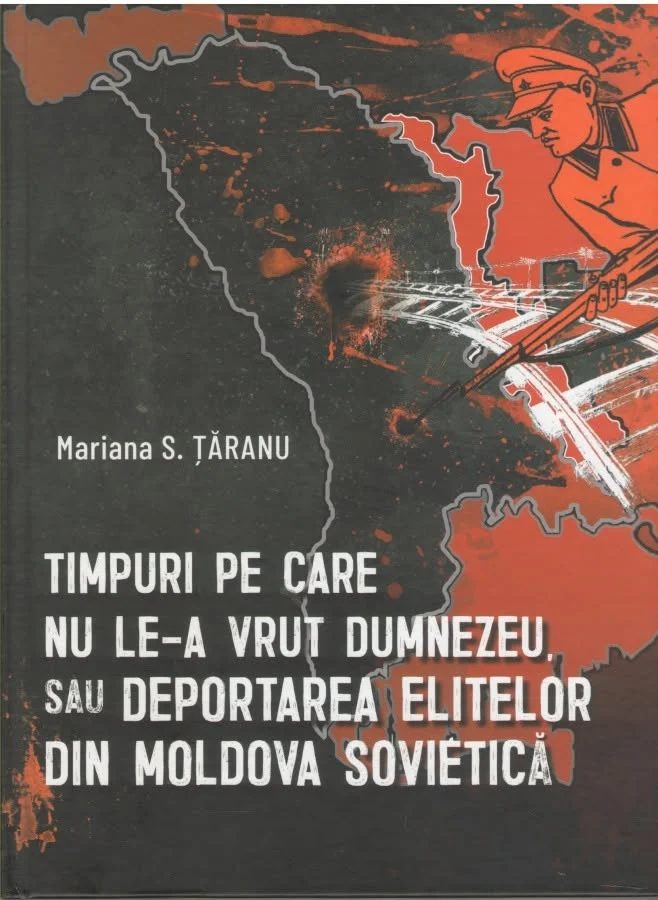
My book Timpuri pe care nu le-a vrut Dumnezeu, sau Deportarea elitelor din Moldova sovietică — Times God Never Wished For, or the Deportation of Elites from Soviet Moldavia, published in Chișinău in 2023 — examines the first wave of Stalinist deportations, carried out on the night of 12–13 June 1941. It then follows the lives of those deported, children’s experiences, attempts to return and the difficulties families encountered at home. The history of deportation consequently extends across decades.
How a person’s past became grounds for accusation
Preparations began well before June 1941. In November 1940, a secret telegram called for the registration of “anti-Soviet elements”. These included prosperous peasants, merchants, former officials, police officers, gendarmes and members of Romanian political parties. For each category, documents were required to support its designation in the individual’s file (p. 11).
I consider this mechanism crucial: occupation, property and previous activities could become grounds for political suspicion. The authorities classified people according to their past and their position within the community.
By “elites”, I also mean local figures of authority: people with education, initiative or economic independence. Their removal weakened communities’ capacity to organise and resist imposed changes.
One family, two destinations
The Chele family from Sângerei provides a concrete example. Constantin Chele, accused of membership in the National Peasant Party, was sentenced in 1941 to eight years of forced labour in Ivdel camp, known as Ivdellag. His wife, Ecaterina, and their daughter Lidia, born in 1940, were deported to the Tomsk region (p. 22).
In my research, I compare Ecaterina Chele’s account with information in Cartea memoriei — the Book of Memory, prepared under Elena Postică’s scholarly coordination. Personal testimony and documentary records help reconstruct both the family’s experience and the course of repression.
We must distinguish between imprisonment in a labour camp and compulsory residence in a special settlement. Conditions and legal status differed. For this family, the separation of the father from his wife and child formed part of the same repressive operation.
Children bore the consequences of accusations against their parents
I devoted a separate chapter to deported children because their experiences reveal how deeply the state intervened in family life.
Vasile Terenti, from Grimcăuți, was fourteen when he was deported and put to work logging. His case is documented in a file held by the National Archives of the Republic of Moldova (p. 116).
Vasile Dumbravă, from Musteață, was six. After his mother’s death, he was placed in an orphanage. In records produced at the place of deportation, his surname appears in the Russified form “Dumbrov” (p. 118).
These cases require us to examine deportation through the loss of childhood and family protection, and sometimes through changes to the identity recorded in official documents.
Returning home while fear remained
Release and return did not automatically restore a home, social standing or the trust of others. In examining these consequences, I also draw on physician Nicu Ioniță’s observations about the trauma of detention, relating them to the documented experiences of deported families (pp. 172–173).
One episode from my interview with Eugen Livovschi on 1 May 2015 has stayed with me. During the 1970s, he had searched for an Ivdellag survivor who could explain how his father, Nicolae Livovschi, the headteacher in Zgărdești, had died. He found someone who had been imprisoned alongside his father. Yet, during our conversation, he refused to identify that person (p. 174).
I interpret this reluctance as evidence of enduring fear in his particular case. It shows why the history of repression must also be traced beyond the removal of administrative restrictions.
Why I wrote this book
I brought together archival documents, memoirs and interviews to explain the relationship between political decisions and human lives. Documents reveal how repression was organised; testimony reveals how it was experienced.
This book is for readers seeking to understand the deportations of 1941, their own family histories and the lasting effects of Sovietisation. For me, restoring names and individual experiences is an essential part of historical research. It helps us see the people behind administrative categories and understand the cost of turning them into “enemies”.
Book details: Mariana S. Țăranu, Timpuri pe care nu le-a vrut Dumnezeu, sau Deportarea elitelor din Moldova sovietică, Chișinău: Lexon-Prim, 2023, 251 pp. ISBN 978-9975-172-24-0.
Page references refer to the Romanian edition published in 2023.